

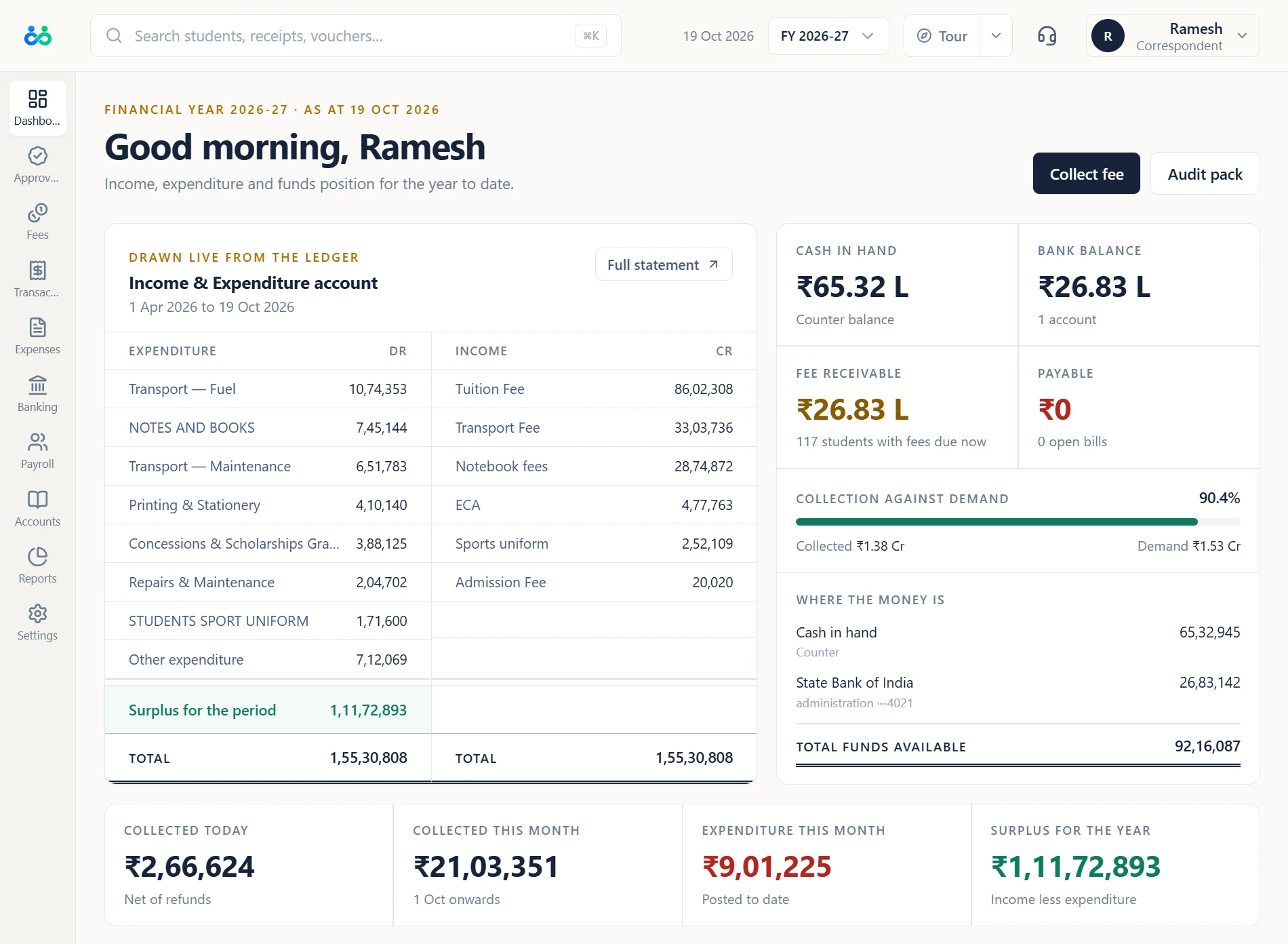
When we built Stoodent, our school accounting product, the most important design decision was one sentence long: a posted entry is never edited and never deleted.
It sounds strict. In practice it is what lets a school hand its books to an auditor with confidence, and it applies well beyond accounting.
The rule accountants already follow
In double-entry bookkeeping, a mistake is corrected with a new entry that reverses the old one. The wrong entry stays in the books, the reversal sits beside it, and the correct entry follows. Anyone reading the ledger later can see what happened, in order.
Most business software does the opposite. It lets a user open a saved record, change a number and save again. The old value is gone. The system now tells a tidy story that may be different from what took place.
What it looks like in a product
- A cashier can cancel a posted fee receipt, which creates a reversal. They cannot edit the amount on it.
- Bills route to the right approver by amount, and the approval is stored with the bill.
- Every change records who made it and when.
- Reports are drawn from the entries themselves, so the trial balance agrees on any day you pick.
Why it is worth the extra work
Keeping history costs more to build. Screens need a cancel-and-reissue flow where an edit button would have been simpler. Storage grows. Developers have to think about reversals in every feature.
What you get back is trust. Disputes are settled by looking at the record. Fraud becomes hard, because hiding it would mean removing entries the system will not let anyone remove. Audits take less time because the trail is already there.
Where else the rule belongs
We apply the same thinking to stock movements, payroll, attendance, customer balances and approvals. If a record would matter in a disagreement, it should be corrected with a new record and kept.
A useful question when you assess any system for your business: if someone changed this number last Tuesday, could I find out who, and what it was before? If the answer is no, the system is asking you to take its word for it.